When you put your products on the shelf, what's the first thing that catches a consumer's eye? Perhaps the packaging design, perhaps your brand. But beyond that first impression, important information such as your product's expiration date, batch number, or barcode is also crucial. This is where inkjet coding comes in. Especially when it comes to blister packaging, the role of this coding can be vital.
Blister packaging visually enhances a product while also providing protection. High-quality inkjet coding is ideal for conveying product information clearly and permanently in this type of packaging. In this article, we will discuss how these two elements – blister packaging and inkjet coding – work together and how this synergy can simplify your business.
Contents
What is blister packaging?
Blister packaging is a type of packaging commonly used to protect medications such as tablets and capsules, as well as small consumer goods. Made from materials like plastic or aluminum, these packages protect the product's shape while also providing a barrier against external factors.
This type of packaging extends the product's shelf life and also offers the consumer easier access to the product. Particularly in the pharmaceutical industry, blister packaging is very popular due to its ease of dosage and portability.
Applications of Blister Packaging
This type of packaging offers advantages such as extending the shelf life of products, portability, and aesthetic presentation. Additionally, blister packaging provides a degree of protection against counterfeiting.
| Pharmaceutical Industry: | Tablets, capsules, syringes |
| Food Sector: | Single-serving coffee capsules, spices |
| Consumer Electronics: | Battery, SD cards, headphones |
| Toys and Hobbies: | Miniature figures, playing cards |
| Automotive Industry: | Spare parts, screws, nuts |
| Cosmetic: | Samples of lipstick, eyeshadow, and portable perfume |
| Medical Devices: | Sterile surgical instruments, dental supplies |
| Office Supplies: | Stationery products, cartridges |
What is inkjet coding?
Inkjet coding is used to quickly and efficiently print information such as barcodes, dates, and lot numbers onto products. Thanks to inkjet technology, it is possible to obtain high-resolution prints even on a wide variety of surfaces.
This method is frequently used in various industries, particularly in the food, chemical, and pharmaceutical sectors. Inkjet coding can adapt to rapid production processes and is a technology that requires minimal maintenance.
Applications of Inkjet Coding
Inkjet coding is commonly used in mass production factories, medical product manufacturers, and food businesses. This technology is essential for increasing the traceability of each product or package.
| Medicine and Health: | Prescription drugs, medical devices, serums |
| Food and Beverage: | Canned goods, bottled beverages, labels |
| Automotive: | Spare parts, tires, accessories |
| Electronic: | PCB components, cables, batteries |
| Chemical Industry: | Cleaning products, paint cans, adhesives |
| PACKAGING : | Cardboard boxes, plastic bottles, metal containers |
| Metal and Steel: | Pipes, structural steel products, alloys |
| Textile: | Labels, fabrics, sewing supplies |
| Wood and Furniture: | Wooden parts, furniture labels, lamination products |
This method is also critically important in terms of logistics and warehouse management. Inkjet coding is used as a tool to easily classify products in the warehouse and ship them quickly.
Compatibility of Blister Packaging and Inkjet Coding
When blister packaging and inkjet coding are combined, they offer significant advantages, particularly in terms of product tracking and quality control. The flat surfaces of blister packaging provide an ideal base for the high-resolution prints of inkjet coding.
This technological advantage allows you to achieve significant gains in speed and efficiency on production lines. Inkjet coding can quickly and efficiently transfer the information carried on blister packaging onto the product.
Why Inkjet Coding for Blister Packaging?
Inkjet coding is a highly suitable coding method for blister packaging. Especially for medical products and pharmaceuticals, it allows for the rapid printing of lot numbers, production dates, and expiration dates onto blister packaging.
The use of inkjet coding in blister packaging also enhances product safety and consumer confidence. The origin and production date of the product can be easily traced, providing added assurance for consumers.
Technological Adaptation
The generally flat and homogeneous surfaces of blister packaging provide an ideal infrastructure for inkjet coding. Thanks to this technological compatibility, the coding process takes place quickly and efficiently, thus preventing any disruptions or delays in the production line.
Modern inkjet coding machines, in particular, can easily adapt to different packaging types. This shows that inkjet coding for blister packaging is a faster and more adaptable solution compared to other traditional labeling or coding methods.
Quality and Assurance
The compatibility of blister packaging and inkjet coding is extremely important for product quality and assurance. Inkjet technology provides high-resolution and legible prints. This is critical, especially for sectors with high security requirements, such as pharmaceuticals and medical products.
Advantages and Benefits
Combining inkjet coding and blister packaging offers numerous advantages and benefits. Firstly, this combination enables rapid labeling and coding of products, thereby increasing production line efficiency.
Secondly, the high resolution and readability provided by inkjet coding allow consumers to use the product more safely. At the same time, inkjet coding machines are generally easy to program and flexible, meaning easy adaptation to different product and packaging types.
You might also be interested in: How to Optimize Packaging Lines in the Food Industry?
Advantages of Inkjet Coding for Blister Packaging
Inkjet coding for blister packaging enables fast and efficient product tracking. This makes it easier to protect products from counterfeiting and ensure quality assurance.
Secondly, inkjet coding is a cost-effective solution. In high-speed and large-scale production processes, this method is more economical than manual labeling or other coding techniques.
Cost Effectiveness
Inkjet coding offers a cost-effective solution for blister packaging. Especially in large-scale production processes, this coding method is a more economical option compared to manual labeling or other coding techniques. Low labor costs, high production capacity, and minimal waste generation constitute the cost advantages of this method.
Product Tracking and Security
Blister packaging and inkjet coding are a perfect match for product tracking and security. During the coding process, important information such as the product's production date, expiration date, and lot number can easily be printed on the packaging. This creates an extra layer of security, especially for the consumer.
Furthermore, easy product traceability is critical for logistics and supply chain management. Each product or batch can be easily tracked thanks to inkjet coding, thus minimizing the risk of counterfeiting or loss.
You might also be interested in: The Future of Inkjet Coding Technologies in the Dried Legumes Sector
Best Inkjet Coding Machines for Blister Packaging
Smartech CI8550 Inkjet Coding Machine
For blister packaging applications, the Smartech CI8550 stands out as a user-friendly option. Thanks to its 10.1-inch color touchscreen interface, you can perform operations quickly and easily.

Another key feature is the device's low maintenance requirements. Carrying the reliable characteristics of Hipack, this model features a self-cleaning print head with the CleanJet maintenance routine. This allows for quick and easy automatic start-up and shutdown. These features are particularly valuable in areas with fast and continuous production processes, such as blister packaging.
Ryanan R10 PRO Inkjet Coding Machine
The Ryan R10 PRO is ideal for blister packaging requiring high-resolution printing. This model, part of the new generation Pro series, can perform high-quality coding even with a single print head. Thanks to its 5-inch touchscreen, you can easily create all your messages and print them with a single touch.
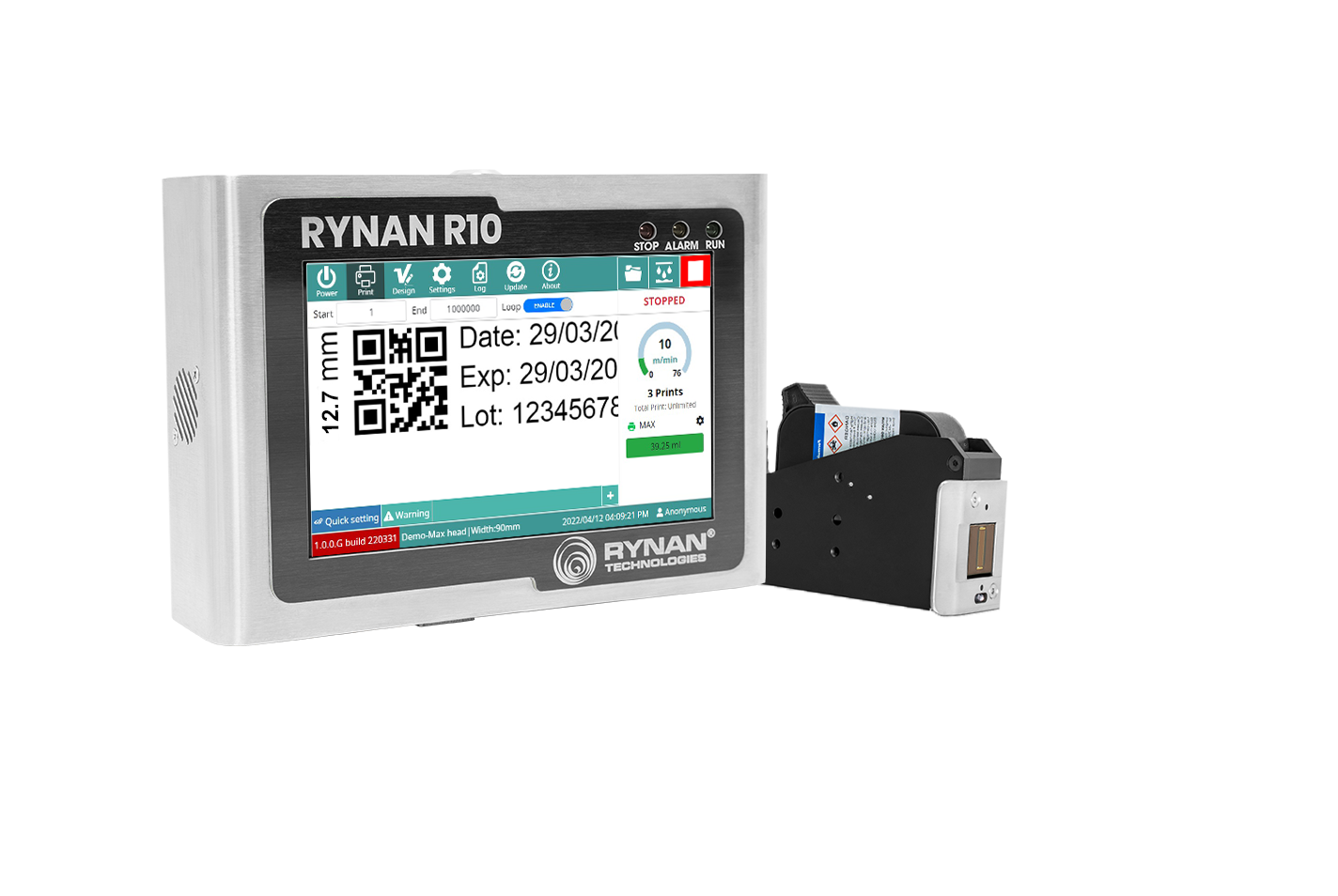
The device's automatic cleaning mode extends cartridge life, reducing operational costs. Thanks to its universal UI software, the user interface is very easy to use. Furthermore, its ability to print all online 2D barcodes provides an extra layer of security and tracking capabilities.
These two models offer powerful and efficient options for your blister packaging coding needs.
You might also be interested in: Simplify Your Production Process with Inkjet Coding Machines
CONCLUSION
In conclusion, blister packaging and inkjet coding make your products more competitive in the market. This combination is ideal for effectively reflecting both product information and brand image. A high-quality inkjet coding system increases the reliability and traceability of your product, while blister packaging provides a superior presentation in terms of aesthetics and functionality.
To optimize your budget and business processes, you can benefit from combining these two elements. Product safety and customer satisfaction are fundamental to any business, and investing in the right technology in this area will lead to long-term success.

If you are looking for a reliable and high-quality partner for inkjet coding machines, Electrojet can offer you its services with years of experience in this field. With its quality product and service options, Electrojet is the ideal solution partner to contribute to the success of your business.
learn about the most suitable equipment for your business and FREE Contact us to.
